20th December; Research- Contemporary Textiles- The fabric of fine art
Research- Contemporary Textiles- The fabric of fine art
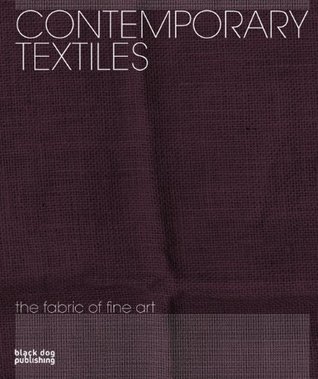
My own studio practice is currently moving toward textiles as the medium along with clay. However, I want to research the ways in which fabric, material and its uses have been viewed over time. Further to this, the ways in which it is viewed in a fine art context. Previous research has revealed the lack of respect that textiles often earns due to the historical precursors. However, I feel this pre-conception could be used to an advantage as there is an endearment that people have to fabric. The soft feel and the domestic association means that it features in lives before being seen in a fine art context. Is this reaching into the everyday? or is it a type of liberation.
Bradley Quinn;
'...textiles were traditionally dismissed as functional forms or decorative expressions.' p10
'...how textiles bridges diverse narratives more easily than most media, and spark interpretations that are both literal and metaphorical.' p10
Annet Couwenberg- Digitised embroidery (p.12)
Tilleke Schwarz- 'Launches open ended narratives' (p.12)

Xiang Yang- 'Embroidery engages with three-dimensional space...' (p12)
Politically engaged wrk, transforming two-dimensional into three-dimensional

Embroidery transcribes the image into the personal, craft allows an 'unlikely intimacy that draws the viewer closer.' p15
'Yet embroidery, as a solitary craft, also evokes a sense of emotional isolation. Rather than building lasting bridges between textile practice and art, it can also present an eerie sense of dislocation and unease.' p15
I want to reflect here on embroidery being both social and personal. The work I am producing is very personal due to the process and also the themes it is reflecting on. They are very close to me. However, they are also themes which affect everyone and the work will be on public display. Therefore, I feel that the work is more in relation to a sociology of stitch. The way I am using it to represent something else, the time and effort put into the work being the memorial and respect paid to the themes and image which will be rendered into the fabric.
Revolutionary motifs
'Fibres imbue artworks with texture and tactility, and incorporate craft practices that provide a means of creating radical expressions, subversive imagery, or simply beautiful motifs.' p15
Needlework has a revolutionary past, used as a symbolic act of dissent by William Morris, in his protest against industrial production. Work that is produced by hand internalises the connection between producer and product. A rare association in the modern world.
Ghada Amer - The definition of the word fear in english, french and arabic 2007

Threads are left hanging to suggest that there is in some way no completion to the work/it is continuous. The three languages is reflective of the artist who moves between all three.
Deconstructed fibres
The unspoken assumption of all textile practice is that it results in a 'finished' product Yet, as artists find inspiration in textiles, they continually question this principle. Exploring whether a textile, like an art object, can ever be considered wholly complete, artists reveal that new methods of construction and consumption are changing traditional textile forms.
Deconstruction= both a philosophy and an aesthetic (and sometimes a metaphor for urban decay)
Stefan Muller- Shredded Canvas (Poetics of deconstruction)
Vocabulary for discussing textile works and practices reach across fields and often into art world.
Moira Chester

Louise Bourgeois
'For Bourgeois textiles are loaded with feelings of responsibility, vulnerability and anxiety, as much for her today as when she was a child.' p19

Within my work there is a dwelling about the use of fabric, and therefore its value. In the above work, it has been used for a layering, playful means. Reflecting on its vulnerability and experimenting with tensions, differing ways to articulate something through fabric.
Janis Jefferies; Contemporary textiles: the art of fabric
Histories terms and definitions
1982- Jefferies wrote a paper, which were presented alongside the international exhibition, Documenta, In Kassel, Germany. It was written to coincide with an experimental show of work that related to a hybrid combination of what was called 'fine art' and textile practices or 'soft art', which formed the foundation of K-18 Kassel:
1982 paper 'The role of soft materials in art' p38
Robert Rauschenberg, Bed 1955
Bed is one of Rauschenberg’s first combines, a term he coined to describe the works resulting from his technique of attaching found objects to a traditional canvas support. In this work, however, there is no canvas. The artist took a well-worn pillow, sheet, and quilt, scribbled on them with pencil, splashed them with paint in a style similar to Jackson Pollock’s action paintings, and hung the entire ensemble on the wall.
The story goes that Rauschenberg used his own bedding to make Bed, because he could not afford to buy a new canvas. “It was very simply put together, because I actually had nothing to paint on,” he reflected years later, in 2006. “Except it was summertime, it was hot, so I didn’t need the quilt. So the quilt was, I thought, abstracted. But it wasn’t abstracted enough, so that no matter what I did to it, it kept saying, ‘I’m a bed.’ So, finally I gave in and I gave it a pillow.”
Hung on the wall like a traditional painting, his bed becomes a sort of intimate self-portrait consistent with his assertion that “painting relates to both art and life…I try to act in that gap between the two.”

Peter and Ritzi Jacobi, Ramanica 1978

My own studio practice is currently moving toward textiles as the medium along with clay. However, I want to research the ways in which fabric, material and its uses have been viewed over time. Further to this, the ways in which it is viewed in a fine art context. Previous research has revealed the lack of respect that textiles often earns due to the historical precursors. However, I feel this pre-conception could be used to an advantage as there is an endearment that people have to fabric. The soft feel and the domestic association means that it features in lives before being seen in a fine art context. Is this reaching into the everyday? or is it a type of liberation.
Bradley Quinn;
'...textiles were traditionally dismissed as functional forms or decorative expressions.' p10
'...how textiles bridges diverse narratives more easily than most media, and spark interpretations that are both literal and metaphorical.' p10
Annet Couwenberg- Digitised embroidery (p.12)
Tilleke Schwarz- 'Launches open ended narratives' (p.12)
Xiang Yang- 'Embroidery engages with three-dimensional space...' (p12)
Politically engaged wrk, transforming two-dimensional into three-dimensional
Embroidery transcribes the image into the personal, craft allows an 'unlikely intimacy that draws the viewer closer.' p15
'Yet embroidery, as a solitary craft, also evokes a sense of emotional isolation. Rather than building lasting bridges between textile practice and art, it can also present an eerie sense of dislocation and unease.' p15
I want to reflect here on embroidery being both social and personal. The work I am producing is very personal due to the process and also the themes it is reflecting on. They are very close to me. However, they are also themes which affect everyone and the work will be on public display. Therefore, I feel that the work is more in relation to a sociology of stitch. The way I am using it to represent something else, the time and effort put into the work being the memorial and respect paid to the themes and image which will be rendered into the fabric.
Revolutionary motifs
'Fibres imbue artworks with texture and tactility, and incorporate craft practices that provide a means of creating radical expressions, subversive imagery, or simply beautiful motifs.' p15
Needlework has a revolutionary past, used as a symbolic act of dissent by William Morris, in his protest against industrial production. Work that is produced by hand internalises the connection between producer and product. A rare association in the modern world.
Ghada Amer - The definition of the word fear in english, french and arabic 2007
Threads are left hanging to suggest that there is in some way no completion to the work/it is continuous. The three languages is reflective of the artist who moves between all three.
Deconstructed fibres
The unspoken assumption of all textile practice is that it results in a 'finished' product Yet, as artists find inspiration in textiles, they continually question this principle. Exploring whether a textile, like an art object, can ever be considered wholly complete, artists reveal that new methods of construction and consumption are changing traditional textile forms.
Deconstruction= both a philosophy and an aesthetic (and sometimes a metaphor for urban decay)
Stefan Muller- Shredded Canvas (Poetics of deconstruction)
Vocabulary for discussing textile works and practices reach across fields and often into art world.
Moira Chester
Louise Bourgeois
'For Bourgeois textiles are loaded with feelings of responsibility, vulnerability and anxiety, as much for her today as when she was a child.' p19
Within my work there is a dwelling about the use of fabric, and therefore its value. In the above work, it has been used for a layering, playful means. Reflecting on its vulnerability and experimenting with tensions, differing ways to articulate something through fabric.
Janis Jefferies; Contemporary textiles: the art of fabric
Histories terms and definitions
1982- Jefferies wrote a paper, which were presented alongside the international exhibition, Documenta, In Kassel, Germany. It was written to coincide with an experimental show of work that related to a hybrid combination of what was called 'fine art' and textile practices or 'soft art', which formed the foundation of K-18 Kassel:
The twentieth century has witnessed many experiments in the 'arts' initiated by new concepts and the use of new materials and techniques. Social, political and economic factors had radically altered the definitions of art and thus changed its meaning. Contiguous with these shifts, the nature, role and status of the decoration and the decorative arts need to be reconsidered. I asked why 'art after duchamp easily includes postcards but not tapestries, Weox but not weaving.' p36This analysis, embarked on by Jefferies, relates directly to my own practice. The chosen argument is that fabric often doubles as utility or craft. The devaluation of craft has a historical background and many problematic discourses. However, textile introduction into fine art should have been mere seamless due to the definition that much of this work fell out of the bracket of utility.
1982 paper 'The role of soft materials in art' p38
Robert Rauschenberg, Bed 1955
Bed is one of Rauschenberg’s first combines, a term he coined to describe the works resulting from his technique of attaching found objects to a traditional canvas support. In this work, however, there is no canvas. The artist took a well-worn pillow, sheet, and quilt, scribbled on them with pencil, splashed them with paint in a style similar to Jackson Pollock’s action paintings, and hung the entire ensemble on the wall.
The story goes that Rauschenberg used his own bedding to make Bed, because he could not afford to buy a new canvas. “It was very simply put together, because I actually had nothing to paint on,” he reflected years later, in 2006. “Except it was summertime, it was hot, so I didn’t need the quilt. So the quilt was, I thought, abstracted. But it wasn’t abstracted enough, so that no matter what I did to it, it kept saying, ‘I’m a bed.’ So, finally I gave in and I gave it a pillow.”
Hung on the wall like a traditional painting, his bed becomes a sort of intimate self-portrait consistent with his assertion that “painting relates to both art and life…I try to act in that gap between the two.”
Peter and Ritzi Jacobi, Ramanica 1978


Comments
Post a Comment