Research- The Culture Industry: Enlightenment as Mass Deception by Theodor Adorno & Max Horkheimer (1944)
Research- The Culture Industry: Enlightenment as Mass Deception by Theodor Adorno & Max Horkheimer (1944)
Notes/Reflections/Quotes of interest
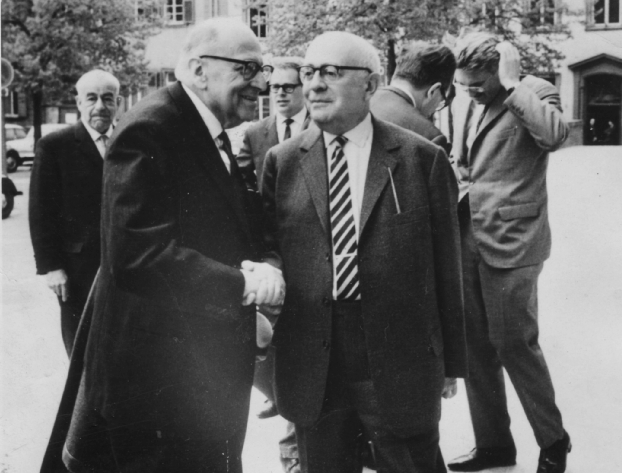
"Culture Industry: Enlightenment as Mass Deception" is a chapter in Theodor Adorno and Max Horkheimer's book "Dialectic of Enlightenment" which discusses their famous notion of the "culture industry". In this chapter Adorno and Horkheimer view capitalist society's culture industry as an aspect of the enlightenment that has betrayed itself by allowing instrumental logic to take over human social life (a notion developed throughout "Dialectic of Enlightenment").
According to Adorno and Horkheimer culture industry is a main phenomenon of late capitalism, one which encompasses all products and form of light entertainment. All these forms of popular culture are designed to satisfy the growing needs of mass capitalistic consumers for entertainment. Adorno specifically notes that the term "culture industry" was chosen over "mass culture" in order to make sure that it is not understood as something which spontaneously stems from the masses themselves, interestingly removing blame from the reader.
Products of the culture economy take the appearance of artwork but are in fact dependant on industry and economy, meaning they are subjected to the interests of money and power. All products of the culture industry are designed for profit. According to Adorno and Horkheimer this means that works of art are turned into a consumer product and are shaped by the logic of capitalist rationality (i.e. whatever sells). Art is no longer autonomous, but is rather a commodified product of the economic relations of production.
Notes/Reflections/Quotes of interest
"Culture Industry: Enlightenment as Mass Deception" is a chapter in Theodor Adorno and Max Horkheimer's book "Dialectic of Enlightenment" which discusses their famous notion of the "culture industry". In this chapter Adorno and Horkheimer view capitalist society's culture industry as an aspect of the enlightenment that has betrayed itself by allowing instrumental logic to take over human social life (a notion developed throughout "Dialectic of Enlightenment").
According to Adorno and Horkheimer culture industry is a main phenomenon of late capitalism, one which encompasses all products and form of light entertainment. All these forms of popular culture are designed to satisfy the growing needs of mass capitalistic consumers for entertainment. Adorno specifically notes that the term "culture industry" was chosen over "mass culture" in order to make sure that it is not understood as something which spontaneously stems from the masses themselves, interestingly removing blame from the reader.
Products of the culture economy take the appearance of artwork but are in fact dependant on industry and economy, meaning they are subjected to the interests of money and power. All products of the culture industry are designed for profit. According to Adorno and Horkheimer this means that works of art are turned into a consumer product and are shaped by the logic of capitalist rationality (i.e. whatever sells). Art is no longer autonomous, but is rather a commodified product of the economic relations of production.
The main argument of "Culture Industry: Enlightenment as Mass Deception" is that the commodification of culture is the commodification of human consciousness.
Notable Quotes for reflection;
Notable Quotes for reflection;
'The result is the circle of manipulation and retroactive need in which the unity of the system grows ever stronger. No mention is made of the fact that the basis on which technology acquires power over society is the power of those whose economic hold over society is greatest.'
'The need which might resist central control has already been suppressed by the control of the individual consciousness.'
'Consumers appear as statistics on research organisation charts, and are divided by income groups into red, green, and blue areas; the technique is that used for any type of propaganda.'
'The alliance of word, image, and music is all the more perfect than in Tristan because the sensuous elements which all approvingly reflect the surface of social reality are in principle embodied in the same technical process, the unity of which becomes its distinctive content. This process integrates all the elements of the production, from the novel (shaped with an eye to the film) to the last sound effect. It is the triumph of invested capital, whose title as absolute master is etched deep into the hearts of the dispossessed in the employment line; it is the meaningful content of every film, whatever plot the production team may have selected.'
'Kant said that there was a secret mechanism in the soul which prepared direct intuitions in such a way that they could be fitted into the system of pure reason. But today that secret has been deciphered. While the mechanism is to all appearances planned by those who serve up the data of experience, that is, by the culture industry, it is in fact forced upon the latter by the power of society, which remains irrational, however we may try to rationalise it; and this inescapable force is processed by commercial agencies so that they give an artificial impression of being in command.'
'Producers have done it for him. Art for the masses has destroyed the dream but still conforms to the tenets of that dreaming idealism which critical idealism baulked at.'
'But in the culture industry every element of the subject matter has its origin in the same apparatus as that jargon whose stamp it bears.'
'The great artists were never those who embodied a wholly flawless and perfect style, but those who used style as a way of hardening themselves against the chaotic expression of suffering, as a negative truth. The style of their works gave what was expressed that force without which life flows away unheard.'
'This promise held out by the work of art that it will create truth by lending new shape to the conventional social forms is as necessary as it is hypocritical. It unconditionally posits the real forms of life as it is by suggesting that fulfilment lies in their aesthetic derivatives. To this extent the claim of art is always ideology too.'


Comments
Post a Comment