Research- Visual methodologies: An introduction to researching with visual material
Visual methodologies
An introduction to researching with visual material
By Gillian Rose
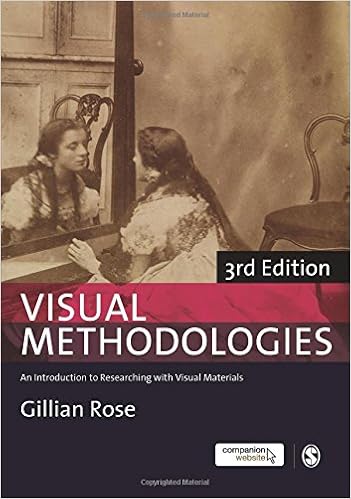
After the last unit I think it is vital now to understand the ways in which artistic practice is integral to my research, the evaluation of the visual. I plan to broaden my research scope into the complicated realms of ‘non-western’ art discourse, or at least as it now exists under western pressures. So to understand that research I need to develop the way in which I use the material I gather. Therefore, working to create and develop my own method and theories which I have designed. This book was recommended in a research lecture and I hope to try and learn more surrounding the field of visual research.
- Researching with visual materials: a brief survey
‘We daily experience and perceptual the conflation of the ‘seen’ with the ‘known’ in china’s versatile through the commonplace linguistic appendage of ‘do you see?’ Or ‘see what I mean?’ to utterances that seem to require confirmation, or, when seeking opinion, by inquiring after people’s ‘views’.’ (Jenks, 1995: 3) p.3
‘Eurocentrism pervades many discussions of the visual.’ p8
The above quote begins to delve into issues which I am tackling in my own research. I need to broaden my knowledge to extend into different cultures and their histories. It is difficult to achieve this as I feel I have no right to pass comment on these cultures however being aware of their existence, methods and aesthetic qualities would enrich my critique of the current visual power systems at play within my own culture. My own work is Interests are in the way in which creativity can aid social sciences progress and therefore societal empowerment; a sound and developed visual method is important for this.
Donna Haraway 1991 theories regarding what is at stake in contemporary ocularcentrism. p9
OCULARCENTRISM- A perceptual and epistemological bias ranking vision over other senses in Western cultures. An example would be a preference for the written word rather than the spoken word (in which case, it would be the opposite of phonocentrism). Both Plato and Aristotle gave primacy to sight and associated it with reason. We say that ‘seeing is believing’, ‘see for yourself’, and ‘I'll believe it when I see it with my own eyes’. When we understand we say, ‘I see’. We ‘see eye to eye’ when we agree. We imagine situations ‘in the mind's eye’. ‘See what I mean?’ Commentators such as McLuhan argue that literacy and the printed word have played a key part in the elevation of the eye to such primacy as a way of knowing. See also McLuhanism; sense ratio; visualism.
Haraway and Hayles, both writers and theorists. Think that there are other was of seeing the world, if one dominant visuality is organising Information and visual cognition to create specific flows, then other flows are possible. p10
Visual methodologies span across multiples disciplines. (Geography, sociology, anthropology, psychology, literature, art history, philosophy)
‘How images can make you feel something’ p10
‘Non-representative aspects of the social (Pink 2007)’ p11
1.2 Understanding the Social Effects of Visual Material p11
Diversity in opinion between recent philosophers and theorists, used to make arguments for representation and non-representation. Difficult to generalise.
Author Suggests five different aspects of the recent literature that engages with visual culture which are valuable fo thinking about the social effects of the image:
1st point- ‘to take from the literature on (or against) ‘visual culture’ is its concern for the way in which images visualise (or render invisible) social difference. As dye an Law (1988: 1) say, ‘a depiction is never just an illustration... it is the site for the construction and depiction of social difference’. One of the central aims of the ‘cultural turn’ in the social sciences was to argue that social categories are not natural but instead constructed.’ p11
‘Writers on visual culture, among others, are concerned not only with how things look, but how they are looked at’ p12
John Berger ‘ways of seeing’ 1972
Culture as a complicated concept, Raymond Williams 1976 p14
‘Mitchell (1994) coined the term image/text as a way of emphasis b the interrelation of images and written text’ p16
Picture of page 16 conclusion
1.3 Three Criteria for a critical visual methodology
What is necessary for a ‘critical approach’ to interpreting found visual images, a critical approach to visual culture:
- takes images seriously
- thinks about social conditions and effects of visual objects (Griselda Pollock)
- Considers your own ways of looking at images
‘Visual images is never innocent; it is always constructed through various practices, technologies and knowledges’ p17
2 Towards a critical visual methodology
‘ theoretical sources that have produced the recent interest in visual culture and visual research menthols are philosophically, theoretically and conceptually diverse. This chapter will
Try to acknowledge some of that diversity, while also developing a framework for
Exploring the almost equally diverse range of methods that scholars working with visual material can use’ p19

3 sites:
Production
Image
Audience
(Split Into 5 sections)
2.1 The three sites of production, the image itself and its audience
Technological- Mirzoeff 1999, anything enhancing natural vision
Compositional
Social- economics, social & political relations/ institutions and practices that surround an image
‘Some argue that it is the economic processes in which cultural production is embedded that shape visual imagery’ p24
Griselda Pollock used to example patriarchal interpretation of an image (Photograph by Robert Doisneau/Rapho Gamma, Camera press london).
Griselda Pollock is the author of one of my favourite books 'Visual politics of psychoanalysis' and has been a massive influence within my work, research and practice. Her holistic approach inspired me to consider how practice can span across a number of fields and can be used to aid the interpretation of another.
2.4 The Site of Audiencing
Griselda Pollock used to example patriarchal interpretation of an image (Photograph by Robert Doisneau/Rapho Gamma, Camera press london).
Griselda Pollock is the author of one of my favourite books 'Visual politics of psychoanalysis' and has been a massive influence within my work, research and practice. Her holistic approach inspired me to consider how practice can span across a number of fields and can be used to aid the interpretation of another.
2.4 The Site of Audiencing


Comments
Post a Comment